Recognizing that every hospital and clinical setting has different needs, resources, and priorities, Addressing Medical Debt: A Playbook for Hospitals and Clinicians is designed to be flexible. Its three practical “plays,” four case examples, and additional resources can help you explore approaches that fit your context and build on existing efforts.
This toolkit includes sample language to help you share the playbook with colleagues, introduce it to your organization or professional networks, and highlight what you learn as you put ideas into practice.
You do not need to implement every recommendation—or have a completed initiative—to share your experience. Early observations, challenges, adaptations, and lessons learned can help other hospitals, clinicians, and communities learn from your work.
Below, you will find sample language for:
- Newsletter Announcement
- Social Media
- Sharing Your Experiences and Lessons Learned
Feel free to customize the sample language to your liking when sharing with your networks.
Subject: A Resource for Addressing Medical Debt
Dear [insert name],
Sharing a resource that may be useful to you and your colleagues: Addressing Medical Debt: A Playbook for Hospitals and Clinicians, developed by AcademyHealth with support from the ABIM Foundation.
The playbook features three practical “plays” and four case examples to help hospitals and clinicians explore ways to address patient health care costs. It includes guidance on improving financial assistance practices, supporting patients as they navigate the costs of case, and mitigating medical debt.
The accompanying one-page resources for hospitals and clinicians are a good place to start, and the full playbook offers additional guidance, tools, and examples if you’d like to explore further.
You can find the playbook and additional resources here.
I hope you find this helpful, and please feel free to share it with colleagues who may be interested.
Newsletter Announcement
Suggested heading: Exploring Approaches to Addressing Medical Debt
Medical debt can affect patients’ ability to access care, meet basic needs, and trust the health care system. Hospitals and clinicians have opportunities to help address these challenges through their financial assistance practices, patient support, and partnerships.
Addressing Medical Debt: A Playbook for Hospitals and Clinicians, developed by AcademyHealth with support from the ABIM Foundation, offers practical guidance to help health care organizations explore these opportunities. The playbook features three “plays,” four case examples, and additional resources to support hospitals and clinicians in identifying approaches suited to their own settings.
Whether your organization is just beginning to explore this work or building on existing efforts, the accompanying one-page resources for hospitals and clinicians offer a starting point for identifying practical actions you can take. The full playbook provides additional recommendations, tools, and examples to help guide your efforts.
Explore the one-page resources for hospitals and clinicians, or dive into the full playbook for additional guidance.
How can hospitals and clinicians better support patients navigating the costs of care?
Addressing Medical Debt: A Playbook for Hospitals and Clinicians, developed by @AcademyHealth with support from @ABIM Foundation offers practical guidance to help answer that question.
Featuring three actionable “plays,” four case examples, and additional resources, the playbook helps hospitals and clinicians explore opportunities to improve financial assistance practices, support patients in navigating health care costs, and mitigate medical debt.
Every organization’s circumstances are different, and you don’t have to do everything at once. Start with the one-page guide for hospitals and clinicians to identify practical actions that fit your setting, and explore the full playbook for additional guidance, tools, and examples.
Explore the resources: academyhealth.org/MedDebtPlaybook
X/Bluesky
- Looking for practical ways to address medical debt? New resources from @AcademyHealth, with support from @ABIMFoundation, offer practical actions for hospitals and clinicians: academyhealth.org/MedDebtPlaybook
- Addressing medical debt looks different across health care settings. As your organization explores new approaches from the medical debt playbook, share what you’re learning to help others adapt their efforts: academyhealth.org/MedDebtPlaybook
Social Media Images
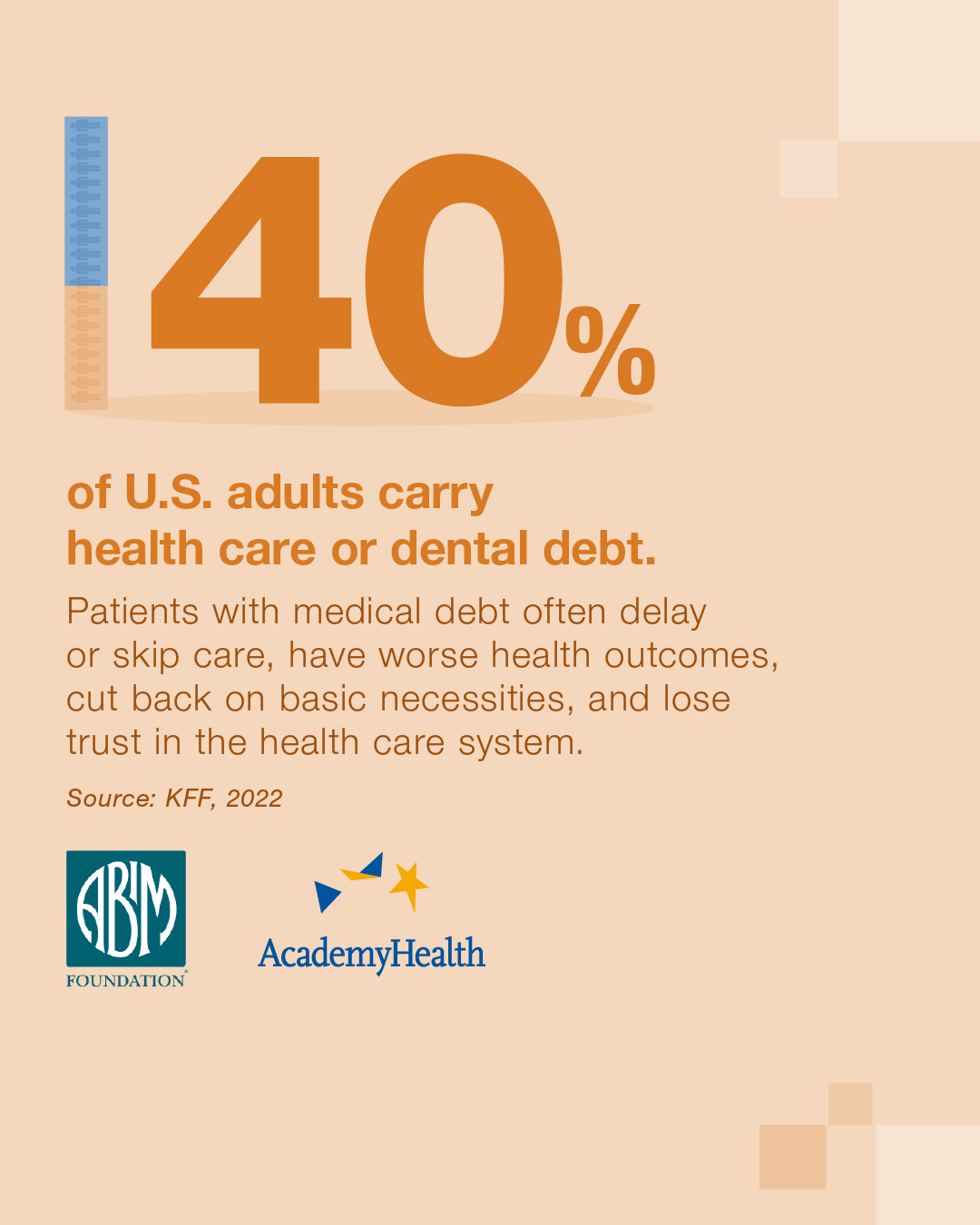
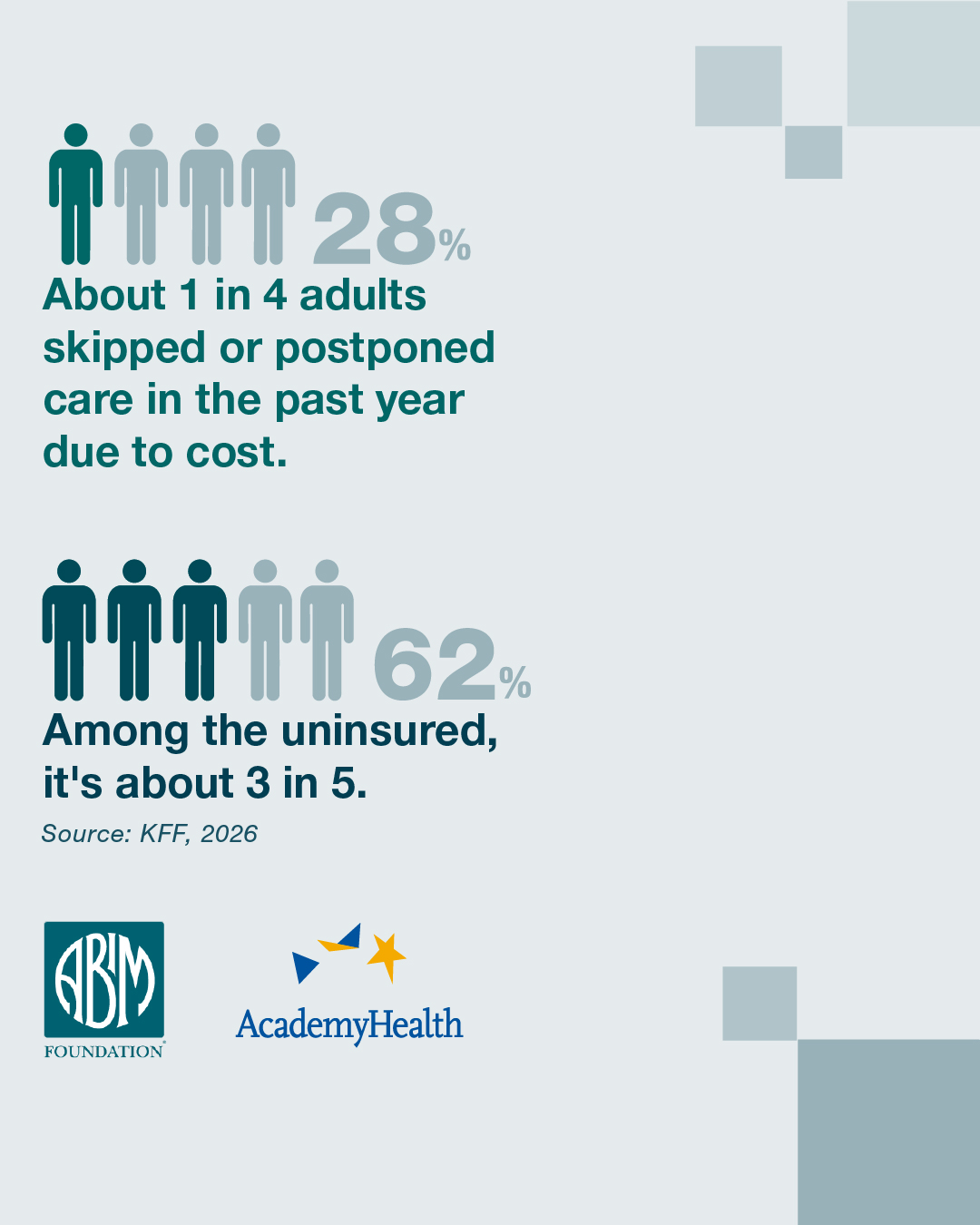
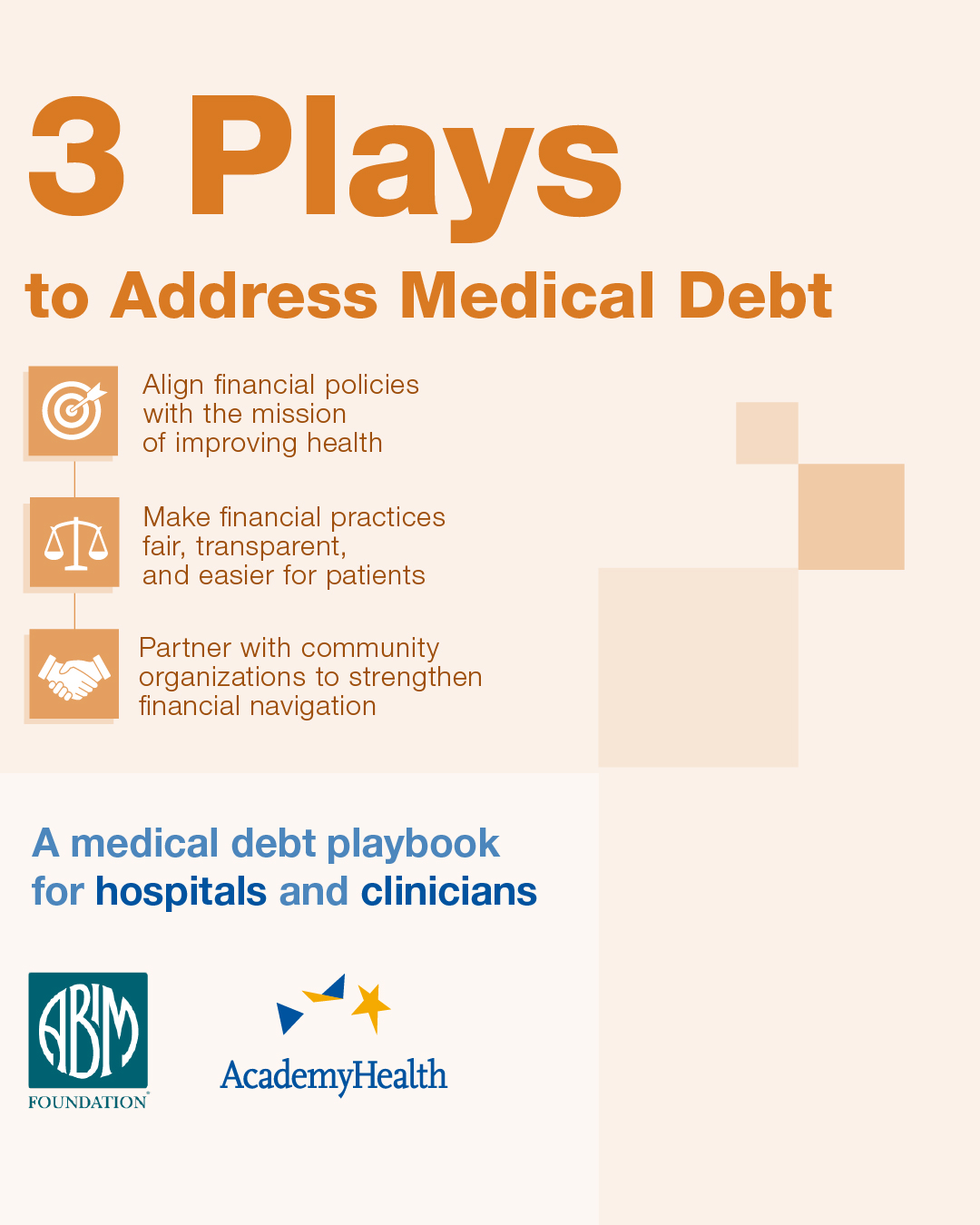
Use these images to accompany your social media posts.
Sharing Your Experiences and Lessons Learned
Addressing medical debt is an ongoing effort, and progress can look different across hospitals and clinical settings. As you explore the playbook’s recommendations or make changes to your practices, consider documenting your progress and sharing what you learn.
Your experience can help other hospitals, clinicians, and communities understand how approaches to addressing medical debt work in practice, and how they might be adapted to different settings.
What you might share:
- Your starting point: What prompted your organization to explore changes to its approach to medical debt?
- Your approach: Which practices, recommendations, or resources have you explored or implemented?
- Your experience: What have you learned so far? What has worked well, and what challenges have you encountered?
- Your next steps: What changes are you considering, and what advice would you offer others beginning similar efforts?
You do not need to implement every recommendation or have a completed initiative or measurable outcomes to share your story. Early experiences, challenges, adaptations, and lessons learned can also be valuable.
Consider sharing your experience through a LinkedIn post, an organizational newsletter, or a conversation with colleagues. If sharing on social media, you can use the graphics provided in this toolkit to help others learn from your work.